3D扫描仪有何用途?
3D扫描技术越来越受欢迎,全球企业都开始采用这项用途多样的科技以提升生产力,削减不必要的成本,提供令人兴奋的全新产品和服务。
引言
3D扫描技术越来越受欢迎,全球企业都开始采用这项用途多样的科技以提升生产力,削减不必要的成本,提供令人兴奋的全新产品和服务。
无论您是一位需要逆向工程出色解决方案的工业工程师,还是一位需要高效制作修复器材的医生,3D扫描都能帮您达成目标。
本文将介绍一些成功实现3D扫描技术一体化的行业,了解这项技术如何帮助他们获得惊人效果,并找到一款适合您的3D扫描解决方案。
工业设计与工程
创新型3D扫描仪已广泛应用于工业设计、工程与制造领域,因为它能快速准确地捕获所需数据。没有这些先进的3D设备,工作人员就必须通过传统的人工方式完成测量,这一过程既耗时又耗钱。强大的3D扫描解决方案可以在产品设计、测试、开发、市场投放、售后等多个阶段大显身手,不仅可以加快工艺整体速度,还能避免代价高昂的错误,提升生产力。

远距固定式3D扫描仪精确捕获大型物体
若想找到具体应用场景的最佳3D工具,我们首先要考虑捕获对象的尺寸和特征。
例如,扫描大型工业产品,如卡车、火车,甚至飞机,推荐使用多功能固定式3D扫描仪。这类扫描仪不需要人员监控,也无需过多操作,就能在短时间内完成准确扫描。
若您的扫描物体没有这么大,同时还有大量精密细节需要精确捕获,那您可使用手持式3D扫描仪。这类3D工具十分灵活,使用方便,能以最佳精度捕获小型物体和复杂几何。

手持式3D扫描仪完成高精度扫描
同理,首先考虑您需要什么样的3D数据。是用于分析、逆向工程、3D打印还是其他用途?无论您选中哪款产品,对于快速原型、品质控制等不同场景,我们都建议您配合使用强大的3D扫描软件。一些高端3D扫描仪专为常见CAD/CAM和3D建模软件设计,为用户带来更多可能。
医疗领域
医疗领域同样从一体化3D扫描技术中受益匪浅。这项技术已用于科研、患者护理、定制个性化医疗方案,为该领域带来了引人瞩目的变化。各类固定式和手持式3D扫描仪的速度、精度,以及最重要的安全性,吸引全球医护人员的目光,他们充分利用这项新兴技术,不仅大幅改善现有部分医疗流程,还创新了部分做法。

便携式3D扫描技术为全球患者改善医疗体验
例如,3D扫描技术为医疗从业人员带来轻松迅速的人体扫描新技术。固定式或手持式3D解决方案均可实现。医生也可将扫描数据用于科研,或长期观察患者躯体变化。3D扫描还能轻松获得术前术后数据,进行精确对比,且比过去简单很多。
定制化医疗解决方案,如护背、植入物、假肢,甚至是定制轮椅,处理起来都变得轻松快捷。3D扫描仪可以轻松捕获所需数据,通过专业3D软件加工处理,最终通过铣床或3D打印机制作完成。
法学鉴定
先进3D扫描技术在法医鉴定领域也愈发受欢迎,因为这项技术便携、灵活又准确。全球范围内,警察、保险公司,甚至在庭审举证过程中,都有专业3D扫描解决方案的身影。
鉴定时使用的3D扫描技术必须便携、灵活、准确。例如,便携式3D扫描仪精确度高,可在室内外使用,即便阳光直射也没问题,这样一来,可以大幅简化证据收集过程。

3D扫描已应用于犯罪现场重建、数据收集等鉴定场景
与传统证据收集方式相比,如摄影或卷尺测量,3D扫描这项强大技术,可以在几分钟内极为准确地捕获数据。这些先进技术已广泛应用于多种鉴定场合,例如在正式收集证据前,捕获完整或部分犯罪现场。3D扫描也能出色捕获修复的证据,以模拟犯罪现场,并进行分析等。3D扫描数据非常准确可靠,得出的结论和发现往往作为警察和保险公司的呈堂证供。
不同品牌推出的3D扫描工具各种各样,但只有少数几款带来真正突破。例如,无线3D扫描仪,搭载机载3D数据处理、内置触摸屏和电池,能在室内外操作,阳光直射也不必担心。
考古学与文物保护
其他领域也纷纷采用3D扫描科技,其中包括考古学和文物保护。
3D扫描技术在考古和文物保护方便的应用不胜枚举。和以往相比,最新3D科技为不同文物制作数字模型,可以让更多的历史片段恢复生机,让更多世人了解历史。从扫描考古现场一小块陶瓷碎片到制作展出几百件展品的在线博物馆,3D扫描科技迅速改变了我们保护、展示、欣赏文物和历史的方式。

结构光3D扫描仪为文物制作数字模型
为考古选择3D解决方案时,我们需要重点考虑扫描环境。很有可能需要在考古现场或任意地点扫描。所以应选择能在室外工作的3D扫描仪,包括支持阳光直射下扫描。此外,设备是否可以外接便携式电池也很重要,如此一来,您就可以随时随地实现数小时连续扫描了。
但是,便携式3D扫描仪主要适用于中小型物体,如果项目涉及的物体体积庞大,比如纪念碑或建筑,可以考虑使用专业固定式激光雷达解决方案,让您短时捕获大量数据。如果您需要捕获尺寸不同的各类文物,或带有精致细节的大型物体,那么搭配使用手持式和固定式扫描仪,效果最佳。
艺术设计
虚拟现实游戏开发者、好莱坞特效师和才华横溢的艺术设计师,希望用多功能3D扫描技术把奇迹带入艺术与设计的世界。

世上颜值最高的游戏之一微软模拟飞行采用Artec Leo制作超现实飞行器
3D扫描可制作酷炫电影特效、逼真的沉浸式虚拟现实,或设计优雅晚礼服,用一种全新方式将创意变为现实。
为艺术设计领域挑选扫描仪时,主要取决于扫描对象和用途。例如,若您想为某人制作游戏形象或虚拟现实中的化身,那么最好使用安全方便、且扫描迅速的3D扫描仪。便携式扫描仪也最有可能让您精确捕获人体全身。
对于小型物体,或有精密细节的物体,比如室内装饰品或珠宝,那就需要选择一款高度准确的3D扫描仪,制作色彩鲜亮、准确度一流的3D模型,还不用担心高难度扫描区!
Education
Educational institutions around the world are increasingly using 3D scanning as a teaching and research tool. Courses related to engineering, archaeology, medicine, and CGI are all benefiting from the technology, as students get hands-on access to cutting-edge industry tools. Turning real-world objects into detailed 3D models also helps educators provide interactive learning experiences that make complex concepts easier to understand and explore.
For example, students can scan mechanical parts to study how they function, digitize historical artifacts for research and preservation projects, or capture human anatomy for medical and biomechanics studies. Once captured, the data can be analyzed, modified, or used for simulations in CAD or 3D modeling software.

Digital twin of a brain captured for teaching purposes with Artec Leo
When selecting a 3D scanner for educational use, versatility and ease of use are key factors. A portable handheld is often the best option, allowing students to capture a variety of objects quickly and safely. AI Photogrammetry in Artec Studio can also be used as an accessible way of getting 3D modeling into the classroom as it works with any camera-equipped device.
Automotive
The automotive industry has long embraced 3D scanning as a powerful tool for design, development, and quality control. Engineers and designers rely on accurate 3D data to analyze vehicle components, improve aerodynamics, and ensure that parts fit together perfectly during production. By digitizing physical components, teams can quickly integrate them into CAD workflows for testing and optimization.
3D scanning is widely used for reverse engineering parts, inspecting manufactured components, and comparing prototypes against original designs. Automotive restoration specialists also use 3D scanning to recreate rare or discontinued parts, enabling them to manufacture accurate replacements using modern production techniques.
One such application was broadcast on the popular British TV show CAR SOS – when a classic Ford Cortina was completely restored using Artec 3D scanning and on-site 3D printing.
Depending on the application, both handheld and stationary scanners can play an important role. Handheld scanners are ideal for capturing smaller components or intricate details, while larger systems can be used to digitize entire vehicles or assemblies at pace.
Architecture, Engineering & Construction (AEC)
In architecture, engineering, and construction (AEC), accurate, up-to-date documentation is essential to project success. 3D scanning has become an invaluable tool for capturing the exact, as-built geometry of facilities, sites, and public infrastructure. In turn, converting real-world environments into highly detailed digital twins is vital to BIM modeling.
Captured data can be imported into BIM or CAD software for plan modifications, detecting issues, and ensuring that new designs fit within existing environments. It can also be used to carry out preemptive maintenance – as demonstrated by GoMeasure3D, who digitized an entire floodwall with Artec Leo & Ray II and identified a number of areas requiring attention.

Artec Ray II being used to capture a floodwall for inspection
When working with large environments such as buildings, bridges, or construction sites, long-range scanners are the most efficient solution. These systems can quickly capture large areas with high accuracy, while handheld scanners are ideal for documenting smaller architectural details or complex interior features. Again, Artec 3D scanning allows such technologies to be combined in a single ecosystem, so no detail is left uncaptured.
Public safety
3D scanning is becoming an essential tool for public safety and emergency response teams, thanks to its ability to quickly, accurately capture large, complex, or hazardous scenes. From natural disasters to structural collapses, first responders can now document a scene in far greater detail than traditional photography or manual measurement ever allowed.
Speed and safety are key considerations in this field. Long-range, drone-mounted 3D scanners let responders capture unstable buildings, collapsed structures, or active hazard zones without setting foot inside. Artec Jet, for instance, can be flown by drone to autonomously map in complete darkness or GPS-denied conditions, while keeping personnel out of harm’s way.
Once an area has been secured, wireless, handheld scanners like Artec Leo also offer a fast, flexible way of capturing evidence and documenting scenes in greater detail. Overall, this kind of rapid, remote documentation helps agencies plan safe interventions, assess damage, and preserve an accurate record of a scene before conditions change any further.
Defense
Defense and military organizations around the world rely on 3D scanning to keep aging equipment in service and speed up the development of new capabilities. Much of today’s military hardware was designed and built before CAD design existed, so accurately digitizing physical parts is often the fastest way of creating usable engineering data.
3D scanning plays a key role in reverse engineering legacy components, producing spares, and supporting quality control. The Royal Netherlands Navy, for instance, uses Artec Eva and Artec Space Spider to reduce turnaround times on replacement parts and regularly inspect components like propellers for quality assurance.
Beyond maintenance and reverse engineering, longer-range 3D scanners like Artec Jet allow military personnel to improve situational awareness. Flying the 300-meter-range device over rapidly changing scenes is a great way of gathering vital intel. Back at base, the technology can also be used to map entire installations, improve planning, and boost logistical efficiency.

Artec Jet: a SLAM-based LiDAR mapping device with defense applications
Metrology
Metrology is another field being transformed by 3D scanning. Industries like aerospace, automotive, and offshore engineering rely on certified, repeatable accuracy for inspecting parts, monitoring deformation, and ensuring components meet exact tolerances.
High-precision devices such as Artec Point II, an ISO 17025-certified laser scanner accurate to 0.02 mm, and the Artec Metrology Kit, a photogrammetry-based optical measuring system accurate to just a few microns, are purpose-built for these demanding applications. The two approaches can even be combined to boost overall volumetric accuracy.
Depending on the level of tolerance you’re working with, 3D scanning is often sufficient on its own. Artec Spider II & Artec Leo offer target-free, sub-millimeter accuracy results. By comparison, Point II delivers more targeted accuracy; it really hinges on what you need. Overall, 3D scanning is an excellent solution for measurement, reverse engineering, or quality control, especially as an alternative to traditional CMM machines.
Mining
In mining, 3D scanning allows you to capture accurate data from open pits, underground workings, and processing plants, while keeping crews safe. Whether it’s monitoring ground movement, verifying stockpile volumes, or mapping old workings, the technology turns tasks that once required manual surveying into fast, remote operations.
Long-range, drone-mounted LiDAR scanners are especially valuable underground, where GPS doesn’t work and conditions can be too dangerous to access directly. Artec Jet, for example, can be mounted onto a drone for autonomously mapping shafts, stopes, and tunnels in complete darkness, while the tripod-mounted Artec Ray II captures pit walls and stockpiles with ease.
Mining service provider Titan Engineered Solutions uses Artec Leo 3D scanning to virtually test-fit industrial floors, platforms, and piping before installation, cutting the time spent returning to site to correct design errors by 66%. Scanning equipment and confined spaces with handheld devices in this way makes it possible to build a complete picture of any site using a single product ecosystem.

继续阅读

在研究过市面上卓越的3D扫描仪后,我们发现大部分都没写明扫描物体的关键参数信息。如物体尺寸等重要分类以及扫描仪的应用场景没有涉及。本篇测评旨在填补这方面的空缺,帮您找到更适合的3D解决方案。
更多信息请访问
学习中心

从定制假肢到极致合身的服装,从 3D 打印模型到逼真的游戏角色,人体三维扫描仪在各个行业中迅速得到人们的关注。在这篇文章中,我们将探讨人体采集的主要挑战、不同类型的扫描仪,以及这项技术如何推动医疗、体育、服装、CGI 等领域的创新。
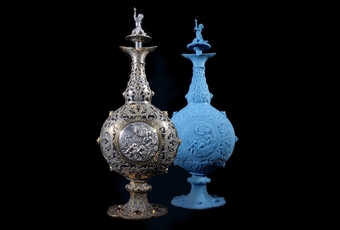
对3D打印而言,合适的3D扫描仪与软件同样重要。阅读本文,了解如何选择3D扫描仪,寻找最佳解决方案,轻松创建3D打印所需的数字模型。

为什么要扫描房间,扫描时需要注意什么?首先,必须确保您使用的3D扫描仪适合这项任务。在本指南中,我们将介绍扫描房间的原因和方法,推荐几款适合扫描房间的三维扫描仪,并告知应该注意的其他事项。